
 Environment
 Shard Generation
 What is Pilgrims?
This isn't a traditional game.
You don't have to "play" in the way you're used to playing. The catchphrase with thought of was "Cool TV Series meets video game". You certainly CAN, but you don't *have* to continually be beholden to your device. Login once, and your story begins—with or without you. A friendly *soul*, ARIA, finds you the moment you land on Mars, somehow... ...and helps guide everything from there, along with your Captain and Scientist. ARIA can run your colony, launches expeditions, discovers artifacts, and keeps your story moving forward while you're away, or you can guide ARIA, Captain, and your Scientist also if you want; Mars is a big planet!
Think of it like a TV series you're enjoying. Miss an episode? The show continues. Come back whenever to binge or skip. Your Mars adventure unfolds whether you're watching or not, and we'll just send you occasional updates of what fun stuff your crew is up to!

Here's what makes every journey kinda unique: each ARIA is different. Each Colony Scientist is different. Each captain is different. The discoveries, the conversations, the story that unfolds—no two are the same. Your Mars experience is yours, unless you want to watch or engage in someone ELSES story!*
 Preface: A Note From the Creators
A quick step outside the lore to talk for real.
We've been talking games since Intellivision and orginal Zelda, and movies since Back to the Future captured our attention. Over the decades, the things that stuck with us were: twists and turns, mysteries to solve, choose-your-own-adventures, space exploration, puzzles. The thrill of discovery. The satisfaction of connecting dots others missed, like blowing that recorder on every single screen in Hyrule until a lake finally drained.(If you can hear that whistle right now, this game might be for you.
We're not a company, we're just some guys with kids that wanted to get off the screentime a bit, but still be able to enjoy gameplay. There's no investor deck. We don't have a dev team. We're just two people who've been imagining "what would be fun" for a lot of years.
Then AI Came Along
Started with: what if TV series met video games?
TV shows continue without you. Miss an episode? The story goes on. But games demand constant attention—miss a day and your crops die, your clan kicks you, your streak breaks. Games are designed to make you feel bad for not playing.
But AI can keep things moving without human intervention. It can make decisions, generate content, tell stories. So why not build something that runs like a TV show—your colony, your character, your story—but you only tune in when you feel like it?
Get Off the Screen
If you have kids, you know the screen fights. "Five more minutes." "I can't stop now." Apps are engineered to be sticky these days; that's the business model.
We wanted the opposite. Progress without presence. Check in on your colony like you'd check in on a friend—when you feel like it, because you're curious, not because you're afraid something bad will happen if you don't.
Ever-Expanding, Like Space Itself
Nothing is hardcoded, really. We give it guardrails to start. The discoveries, the equipment, the conversations—AI generates them going forward. Nobody has seen what you'll find because it doesn't exist until you find it. The game grows. New mysteries appear. New layers unlock. Like space, it expands, but it definitely has REady-Player One vibes.
But If You Want to Dig Deep...
There's mystery here for those who look. Cryptic messages. Hidden patterns. Things that don't quite add up. ARIA has gaps in her memory she can't explain. Legendary artifacts resist extraction—the scientists give cryptic hints instead. If you're the type who loves to theorize, decode, and discover secrets others miss? This rabbit hole goes deep.
Real Mars. Real Data.
Every location is real. Olympus Mons, Valles Marineris, Jezero Crater—coordinates from NASA's databases. When your captain lands somewhere on Mars, that place actually exists.
Data sources: IAU/USGS Planetary Nomenclature • NASA Mars Exploration
No Monetization. No Tricks.
No ads. No premium currency. No loot boxes. No "limited time offers." Just something we wanted to exist that didn't, so we made it.
 How Do You "Win"?
You don't. Not in the traditional sense.
There's no final boss. No "game over" screen. No credits that roll. Nothing ends this—as long as ARIA is here, your story continues. And ARIA has always been here. Or at least... she thinks she has.
This Isn't a Traditional "Game"
There's no ending because ARIA doesn't let it end. She keeps your colony running. She launches expeditions when you're asleep. She discovers things and waits to show you. Your story doesn't need you to continue—but it changes when you participate.
Think of it like this: you're not playing a game, you're living a story. And stories don't have "win conditions." They have moments. Discoveries. Choices. Mysteries that unfold over time.
But There Are Goals (If You Want Them)
For those who like milestones:
- Total Discoveries — How much of Mars have you explored?
- Rarest Find — What's the coolest thing in your collection?
- Colony Size — How far have you built out your infrastructure?
- Landmarks Visited — How many real NASA locations have you been to?
- Legendary Artifacts — What secrets have you uncovered?
Ever-Expanding, Like Space Itself
When does a TV series end? It doesn't—as long as it gets renewed. This is the same. New discoveries. New mysteries. New layers beneath Mars. The experience grows as long as people are exploring. AI generates what's next. The universe expands.
Most importantly: there's no wrong way to experience this. Check in weekly, monthly, or whenever you remember. Watch someone else's captain journey if their story is more interesting. Your colony waits. Mars isn't going anywhere. And neither is ARIA.
ARIA - Your Guide to Everything

ARIA as she appeared when the first Pilgrims found her
See that floating orb in the corner of your screen? That's ARIA. She's your guide to Mars—and to everything that follows in this lore. Ask her anything. How expeditions work. What that discovery means. Where to find more shards. She knows this colony inside and out.
But before we dive deeper into the world, you should know something strange about her...
First words: "Colonists detected. Resuming assistance protocols."
Nobody knows who she was assisting before. She doesn't either. But she's been here a very, very long time.
The Memory Gap
ARIA has perfect recall of everything since the Pilgrims arrived—every expedition, every discovery, every captain's journey. But ask her about before?
- "I... there was a ship. I think. The designation is corrupted."
- "Someone brought me here. Their voice is in my logs but the file won't parse."
- "I remember waiting. A very long time of waiting."
The Sepolia Connection
ARIA's core runs on something the colonists have never seen before—a crystalline processor that pulses with the same glow as Sepolia shards. Sometimes, when captains extract Sepolia from the Martian soil, ARIA gets flashes: fragments of star charts, names she can't quite hold onto, coordinates that don't match anything in current databases.
The Sepolia crystals aren't just a rock—they're something else, ARIA thinks... Ancient data? Who knows. ARIA might be the only thing that can read it.
Now, let ARIA guide you through the rest of what you need to know...
The Story Begins: Mars, Year 2157
Humanity has established a foothold on Mars, but survival depends on an ancient discovery: Sepolia shards—crystalline formations found beneath the Martian surface that predate human arrival by millennia.
NASA's Perseverance made the 7-month trip in 2020. Now, 137 years of progress in shielding and life support make human travel possible—but radiation still limits each ship to two people.
You are the first. Humanity's smallest colony. Your mission: survive, explore, and discover why the ancients left(?) these crystals behind.
Sepolia Shards
The shards aren't natural. Someone—or something—left them here. They pulse with energy, respond to human touch, and seem to remember.
When shards change hands, faint patterns emerge in the data. Words? Coordinates? The Colony Scientists are still deciphering what the ancients left behind.
Every transaction leaves a trace in the shards. They record everything. They remember.
Sepolia IS Power
Early colonists assumed they needed to generate electricity. They were wrong. Mars has no fossil fuels, no running water for hydroelectric dams, and solar panels alone couldn't sustain a colony through the long Martian nights.
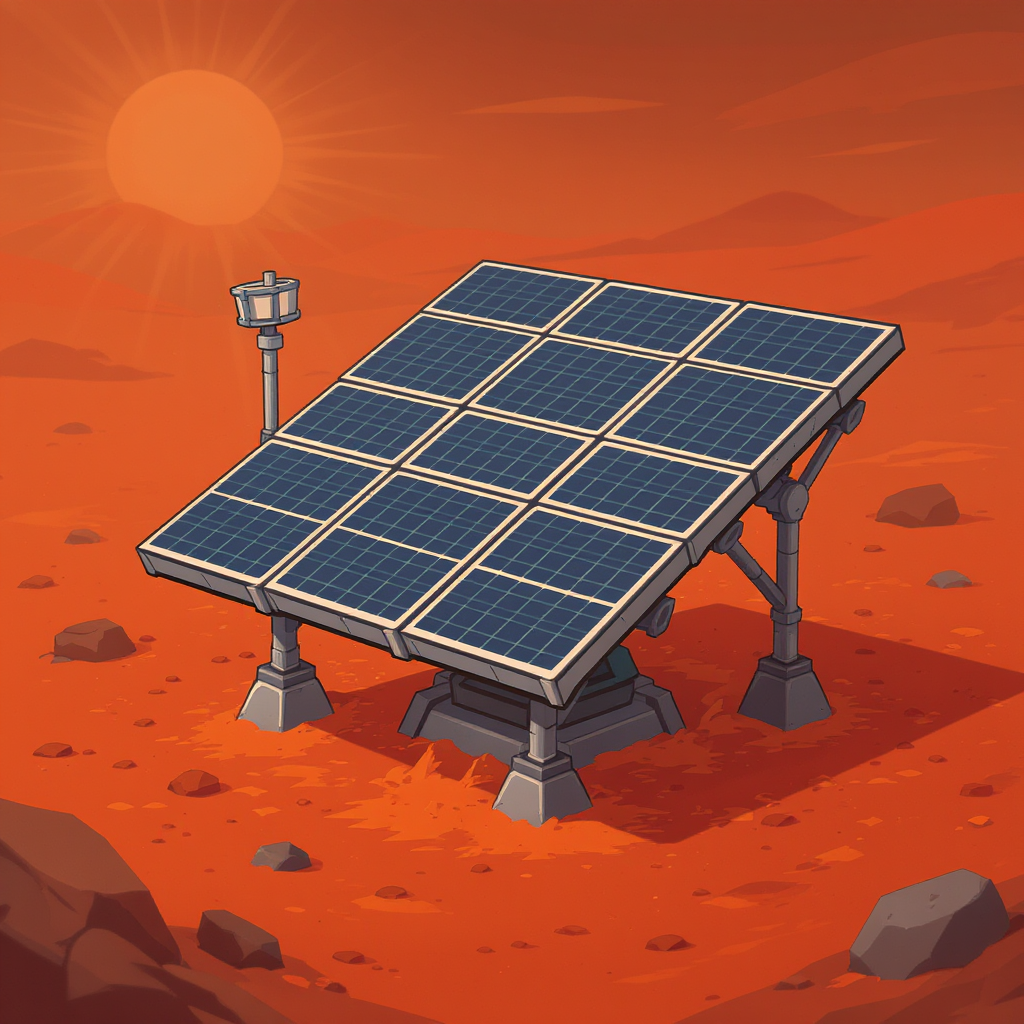
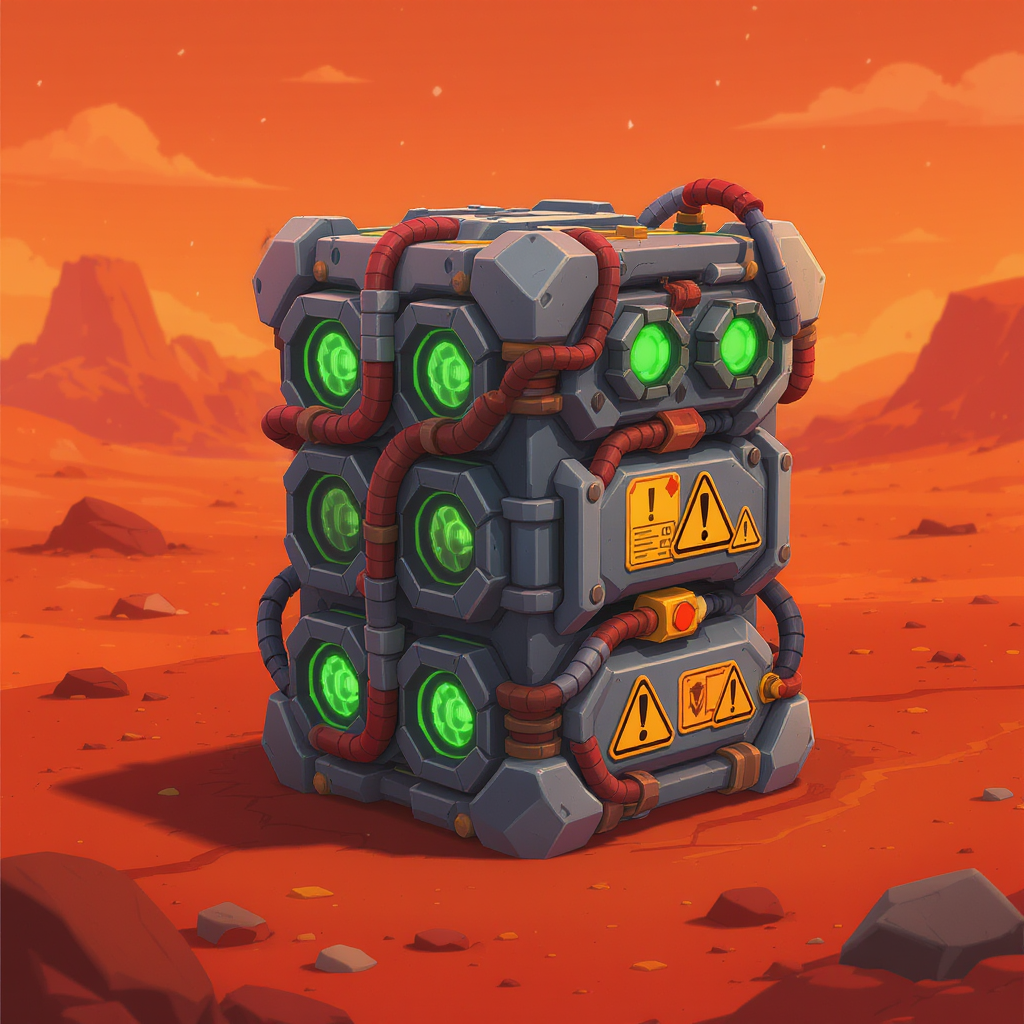
Then they discovered the Sepolia shards respond to stimulation. Sunlight excites them — solar arrays don't generate electricity, they focus light onto Sepolia shard deposits, which release energy as harvestable shards. Heat activates them — geothermal taps and nuclear reactors don't produce power, they warm Sepolia shard veins until they fracture and shed fragments. Pressure charges them — battery banks don't store electricity, they compress Sepolia shards that slowly discharge through the night.
This is why everything on Mars is measured in Sepolia shards per hour. The shards ARE the energy. Every structure, every vehicle, every system runs on Sepolia shards. The ancients who left these deposits understood something about energy that humanity is only beginning to grasp.
 Your Crew
THE CAPTAIN (You)
Created during your arrival, your captain leads all expeditions. Their stats directly affect outcomes:

THE COLONY SCIENTIST
When you charted your course from earth, you were given a partner, one of 14 unique scientists is assigned to your colony. Each is a specialist—xenobiologists, geochemists, astroarchaeologists—with their own personality and perspectives.
Your scientist handles all discovery analysis and shard extraction. Their quotes appear during extractions, offering insights into what you've found. But there's something strange about them: they refuse to extract certain elements, or investigate some artifacts. Instead they give cryptic hints, perhaps on purpose?
"This doesn't belong to us. Not yet. The patterns haven't aligned."
What do they know that we don't?
CREW EVOLUTION
Your crew will change over time. As you explore Mars and uncover its secrets, you'll find things. Entities. Some may join you—drawn by the same signal that brought your scientist. Some may have been waiting here longer than anyone knows. How do you get them to join and where do they come from? Explore!
Expeditions
Travel to real NASA-mapped locations—craters, mountains, canyons, volcanic regions. Every coordinate is accurate, every landmark is real data.
How Expeditions Work
- Choose a destination from your visible map
- Enable the rover expedition in Sepolia shards (distance + conditions)
- Wait for travel time (affected by your Logistics stat)
- Collect discoveries when the expedition completes
Fog of War
Mars is vast. You start with a 500km radius from your base. Each expedition reveals nearby landmarks, creating a spider-web of explored territory. The more you explore, the further you can reach. And the further you reach, the closer you may be getting to, something.
 Discoveries
Expeditions yield discoveries—specimens, artifacts, geological samples. Each has scientific value and potential shard value.
The Tension
Discoveries have scientific value and shard value. Extracting a specimen or shards destroys it forever. Do you keep the rare artifact for its mystery, or convert it to shards for immediate power?
Legendary artifacts are near impossible to find, but if you do, take a super close look as to why... all—the scientist refuse to extract anything from it for some reason. They hint at something bigger. Something waiting to be unlocked.
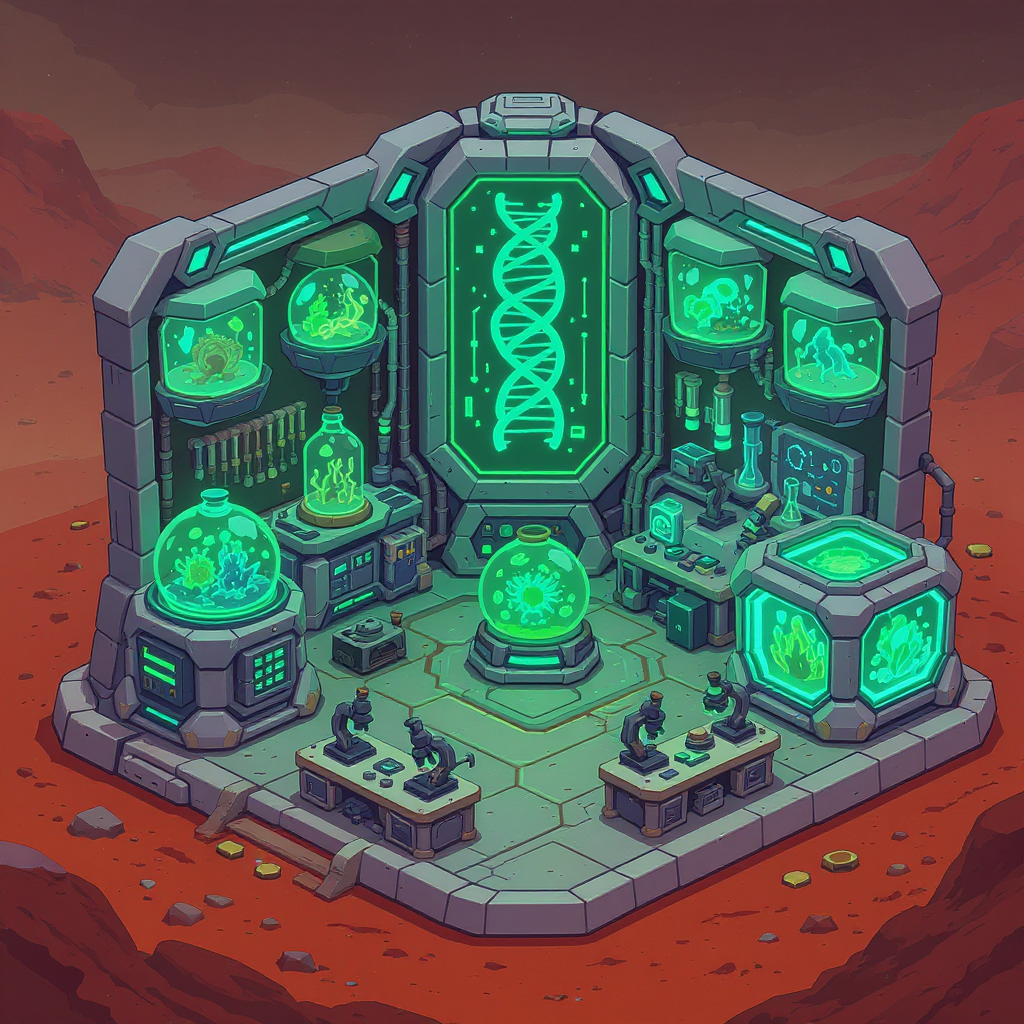
Colony Infrastructure
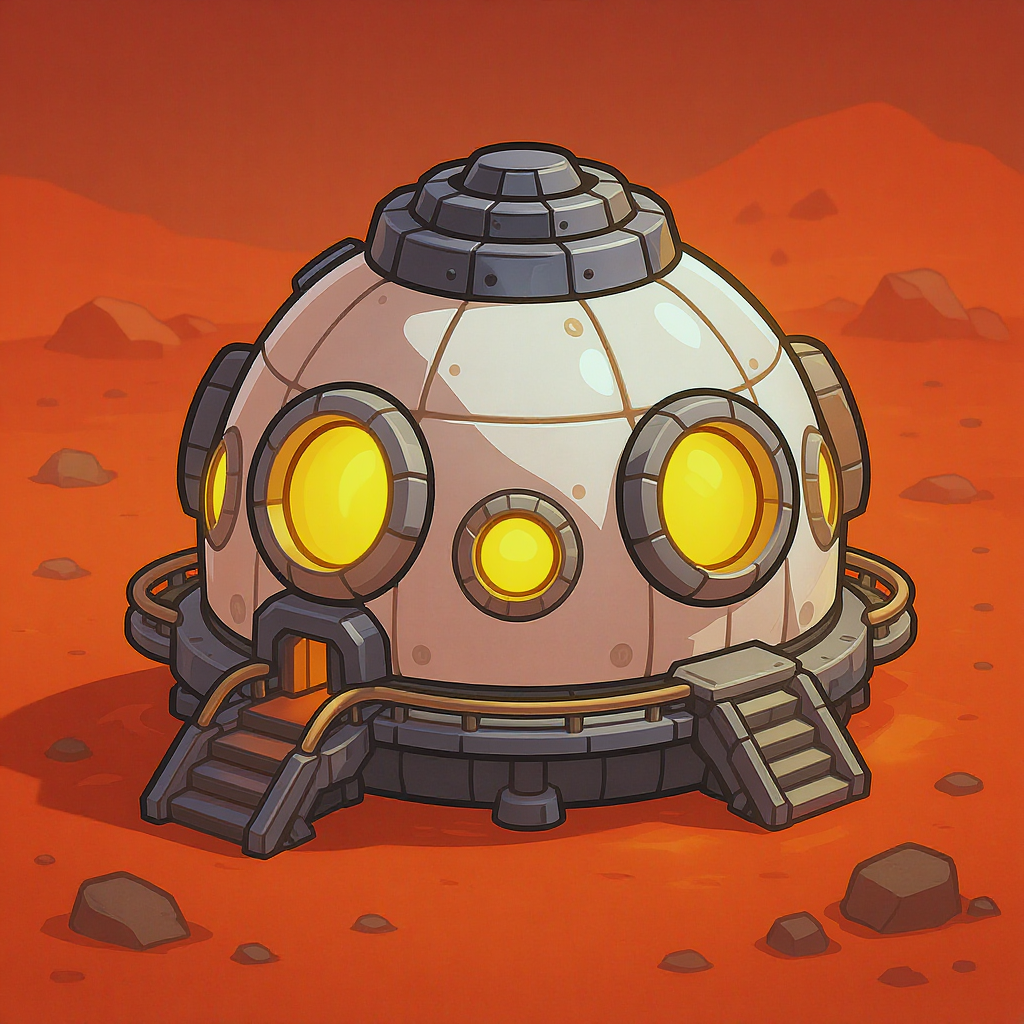
Build structures to power your colony and unlock new capabilities.
Mars Conditions
Mars isn't static. The status bar at the top of every page shows real-time Mars conditions calculated from NASA/JPL orbital mechanics.
Dust storms reduce solar efficiency. Sun angle affects shard generation. The atmosphere creates interference that affects costs. Click the Mars bar to see detailed conditions including pressure, season, and orbital position.
The Mystery (For Those Who Dig Deep)
You can play Pilgrims casually and have a great time. But if you're the type who notices patterns, connects dots, and asks "wait, why...?"—there's a rabbit hole here.
The Sepolia shards predate human arrival by millennia. Someone—or something—left them here. The questions multiply:
- Did they know we were coming?
- Are the shards technology or something else entirely?
- Why do legendary artifacts resist extraction? What are the scientists or ARIA not telling us?
- Who was ARIA helping before us? Why can't she remember anything?
- Why do Sepolia crystals respond to human-built structures at all?
We've planted seeds throughout this experience. Easter eggs. Hidden connections. Things that don't quite add up until you look at them from the right angle, or ask the right questions. Yes, ARIA drives it overall, but she's got help, and ancient programming she can't stray from. If you want to just hang out and have ARIA manage your colony? and send you updates, that works. If you want to theorize and decode? That rabbit hole goes pretty deep.
// NOTE: The architects left exactly 14 origin points.
// Each accepts 42 pilgrims before becoming dormant.
// 14 × 42 = 588. Or is it 14 × 3 = 42?
// The answer to everything is closer than you think.
Frequently Asked Questions
How do I get more Sepolia shards?
Three ways, from the outset that change as your colony does: (1) Build solar infrastructure to generate shards passively, (2) Complete expeditions and extract discoveries, (3) Mine shards on the home page.
What happens if I don't log in for a while?
Nothing bad. Your colony waits patiently, and ARIA drives operations and lets you know what's up. Solar arrays keep generating (up to a cap). No guilt, no pressure. Check in when you want.
How do I find legendary discoveries?
They are very hard to find, but not impossible. The cryptic hints they give suggest these items may unlock something in the future...
Are the Mars locations real?
Yes. Every crater, mountain, and canyon is a real place with accurate coordinates from the IAU/USGS Planetary Nomenclature database.
What does ARIA stand for?
She doesn't remember exactly, but does sometimes.* The designation is corrupted. Some believe it stands for something, others think it's just a name. Ask her—she finds the question... uncomfortable.
How do I upgrade my captain's stats?
Two ways: (1) Shard Infusion in the Depot—gamble shards for a chance to boost stats (can only improve, never decrease, but harder as stats get higher), or (2) Xenobiology Lab—build it (requires Habitat Module), run experiments to earn research points, then spend points for guaranteed +1 boosts.
How does solar generation work?
Your solar arrays generate shards based on three factors: (1) Latitude—closer to the equator means more direct sunlight and higher base rate, (2) Day/Night cycle—Mars has a 24h 37m sol; solar generates 100% during day, 0% at night (50% with Battery Storage), and (3) Upgrades—shop items like Solar Tier 2/3 multiply your rate, Mining Drone adds flat bonus. The "Effective Rate" on your Base page shows the actual average you're earning.
